
FLOORS. LEAKS. DRYING.
Floor and slab moisture
How wet the slab is, how far it has spread, and when it is fit for a new floor covering.
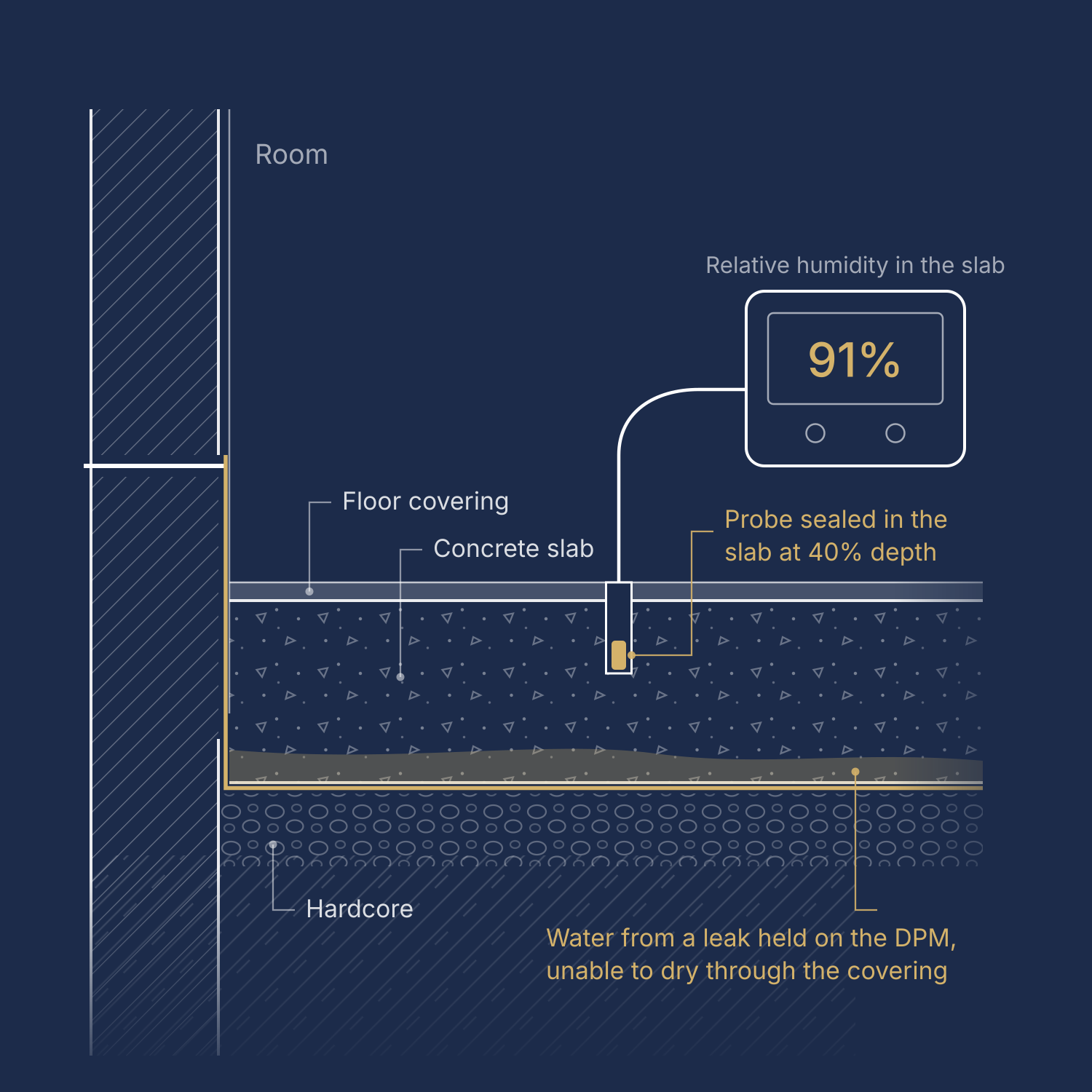
After a leak the expensive mistake is relaying too soon and paying for it twice. Measured in the slab to BS 8203, not read off the surface.
The tests
Each one answers a different question about the floor.
Measure the slab
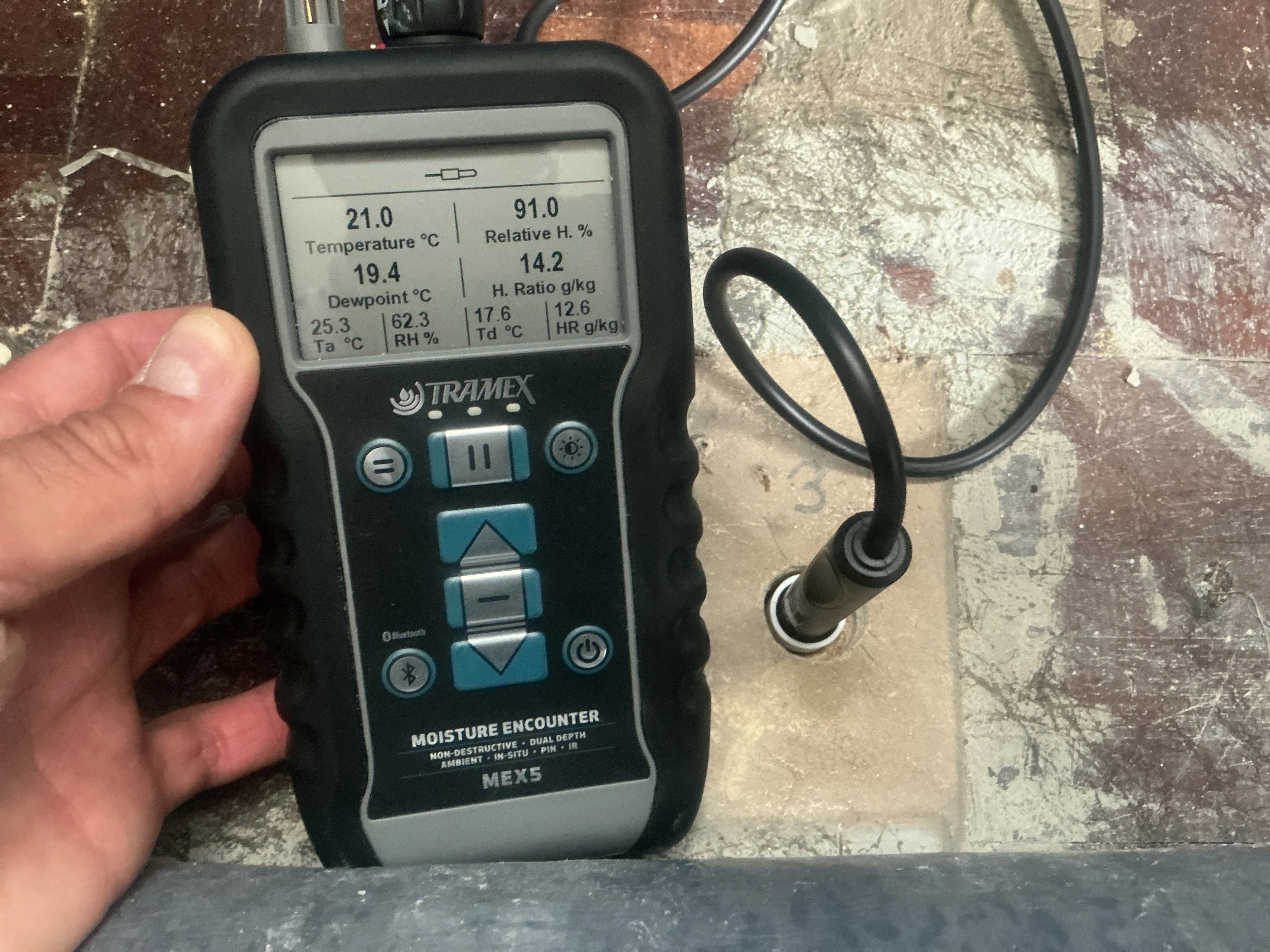
Humidity hood and in-situ probe tests, to BS 8203 and ASTM F2170. The reading a flooring contractor needs before laying.
Find the source
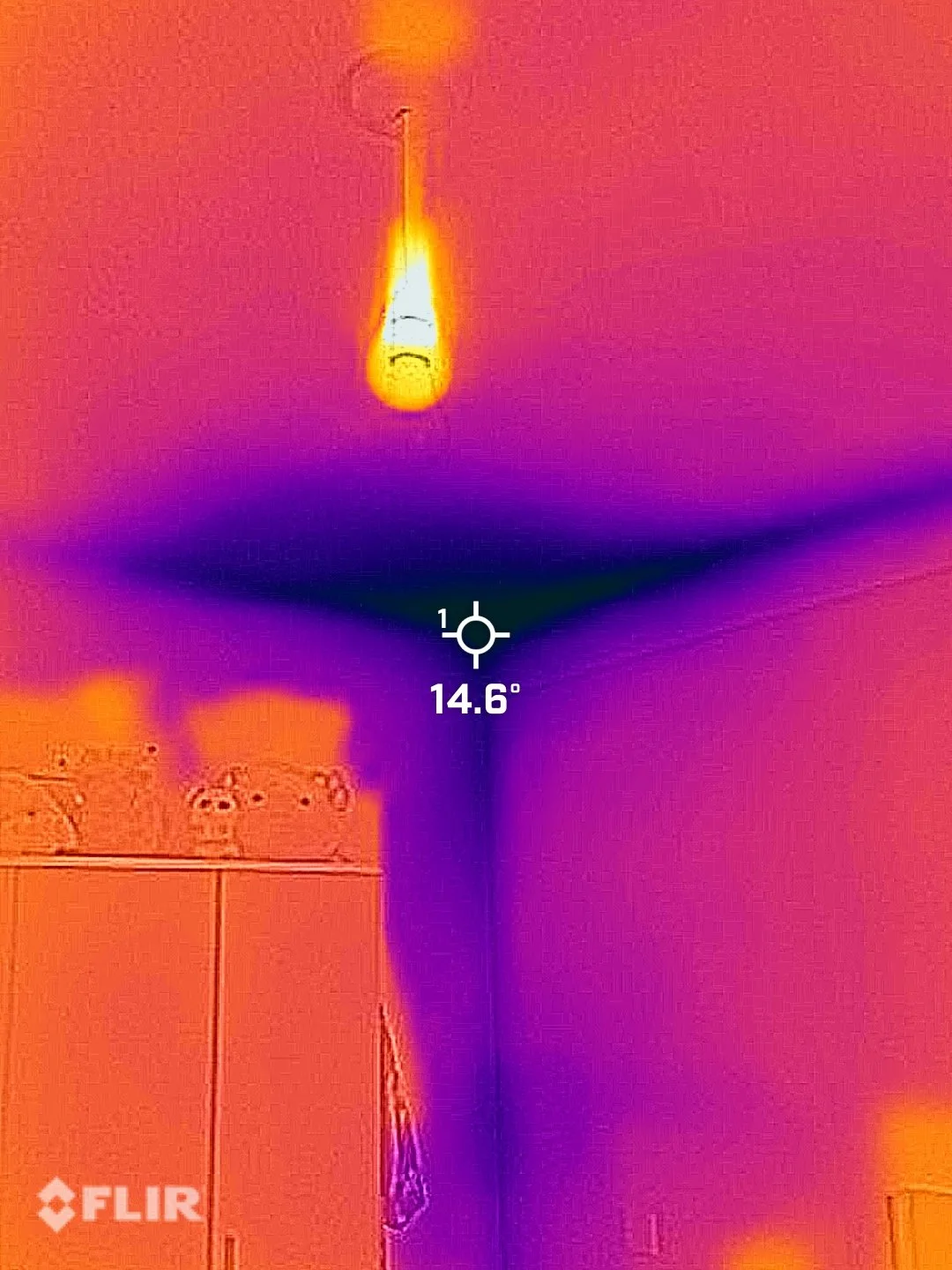
Thermal imaging shows pipe runs, cold edges and where moisture is evaporating.
Check the edges
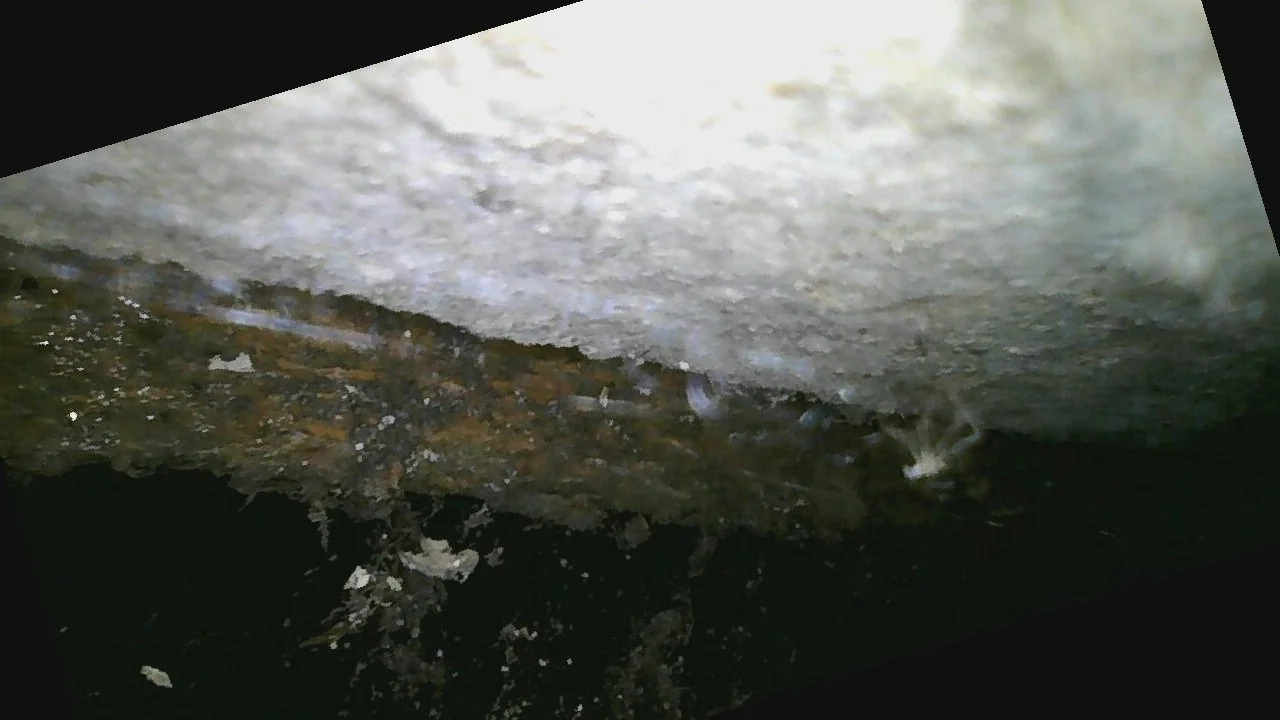
An endoscope at thresholds and wall bases shows whether the DPM and DPC join.
Test at depth
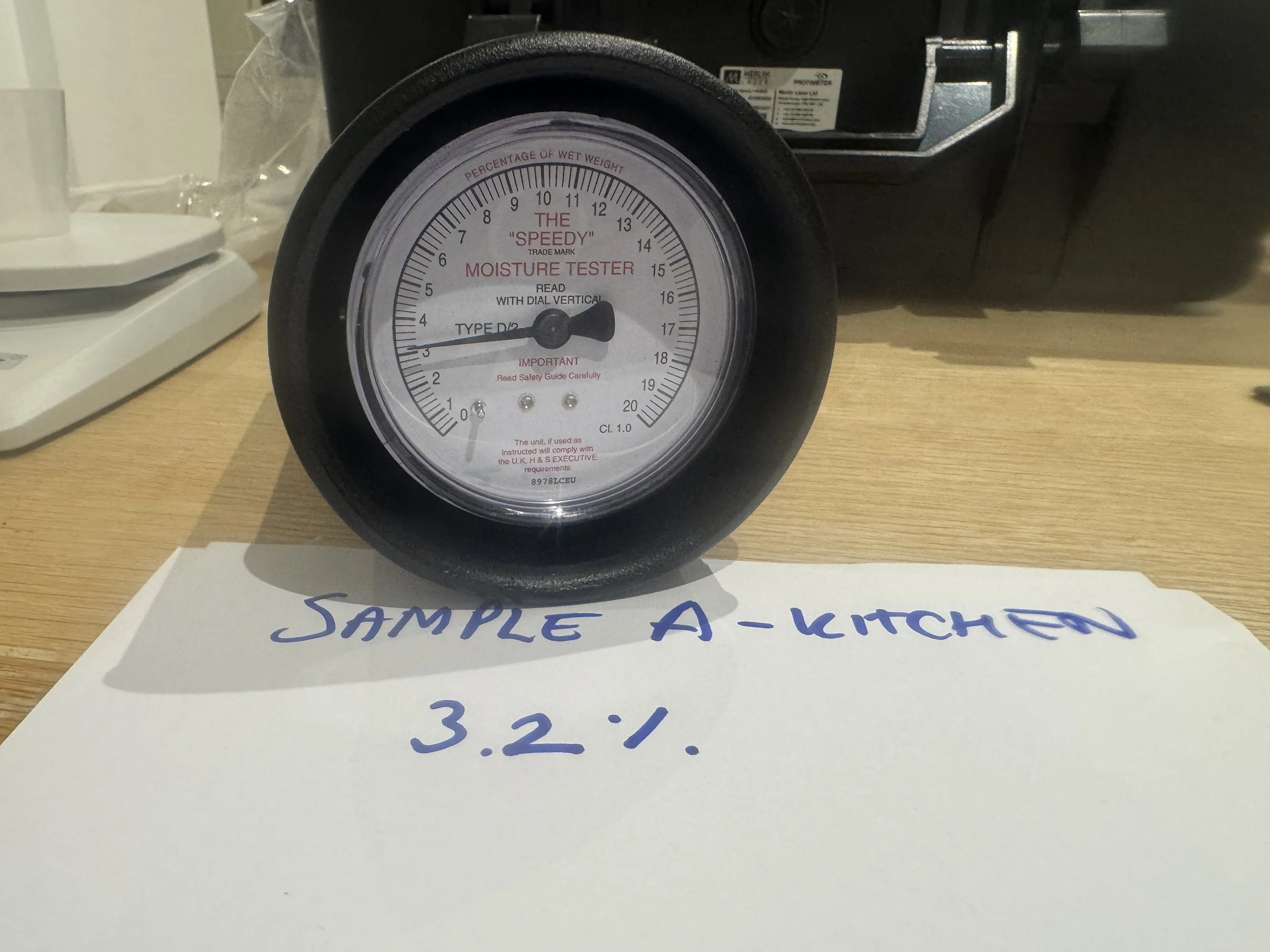
Carbide tests on drilled samples give moisture content through the slab.
One leak, or two sources?
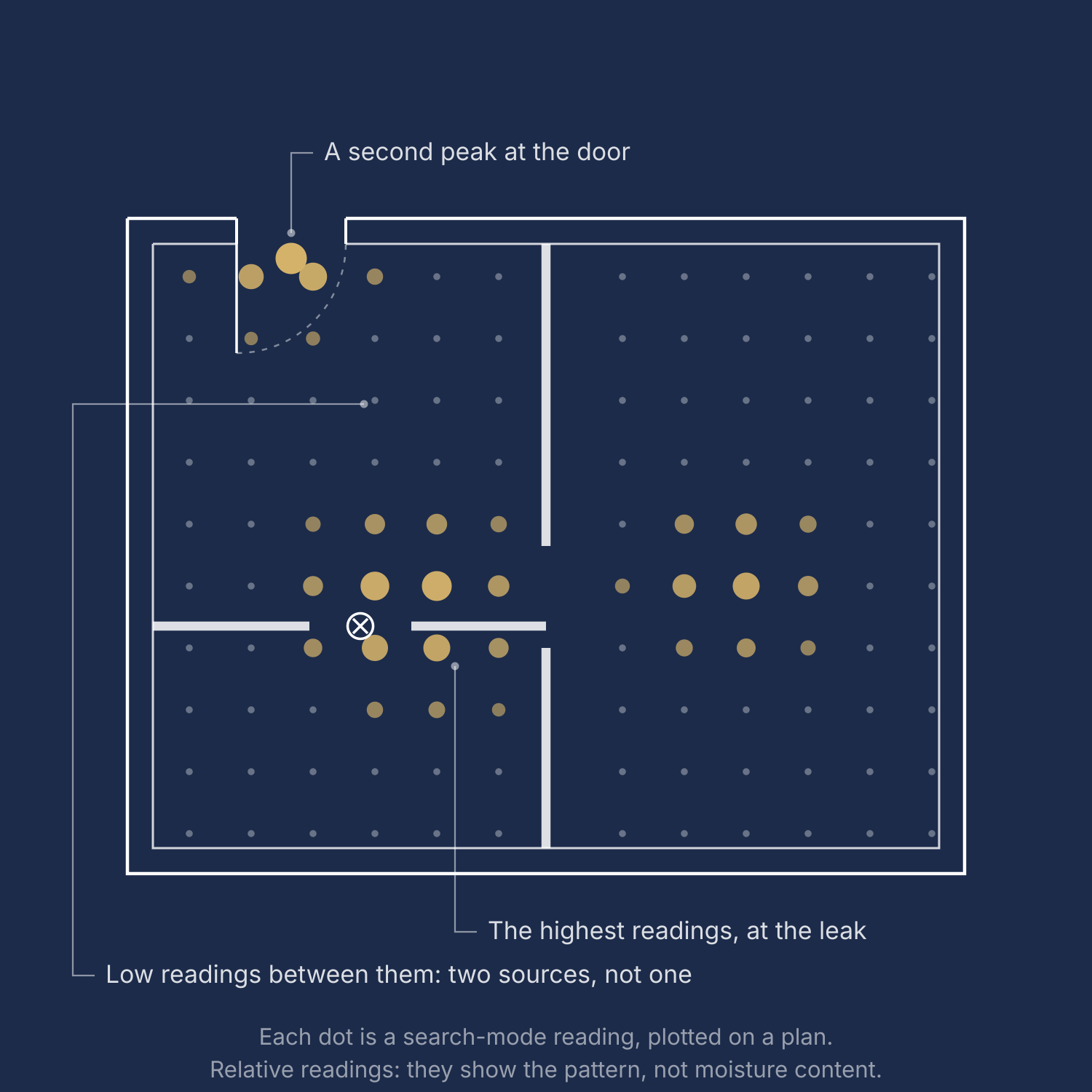
A moisture map shows the pattern across the whole floor. A wet area round a leak looks different from damp coming in at the edges.
Drying monitoring
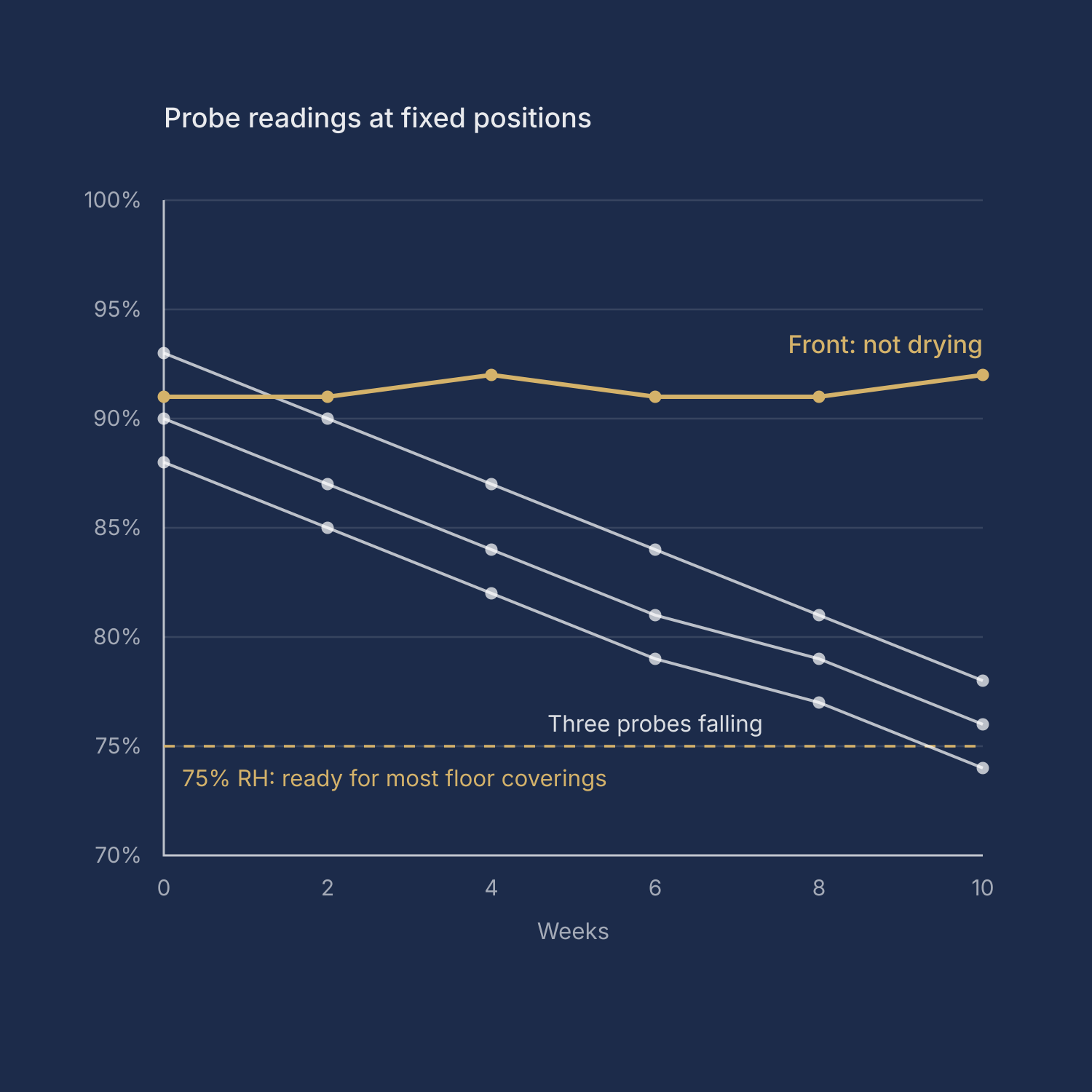
Probe, hood and reading positions fixed and recorded on a plan, usually on the first investigation visit. Every later reading comes from the same spot.
Set-up
Readings
Sign-Off
Return visits at agreed intervals. Same positions, same instruments, same method, so the figures are comparable.
Update
A short written update after each visit with the readings and the trend, so everyone can see whether it is actually drying.
A final statement when the slab reaches the figure the floor covering requires, with the evidence behind it. That is what a flooring contractor needs before laying.
Clear about the readings
Mapping readings are relative. They show the pattern, not moisture content.
Humidity and moisture content come from the hood and carbide tests. The report says which is which.
Instructions and enquiries
jonathan@durndell.co.uk · 01908 040469