Forensic Damp Investigation – School Extension, Milton Keynes
Client: Local authority school
Building Type: Single-storey classroom extension
Issue Reported: Rising damp affecting perimeter walls within a new extension
Summary
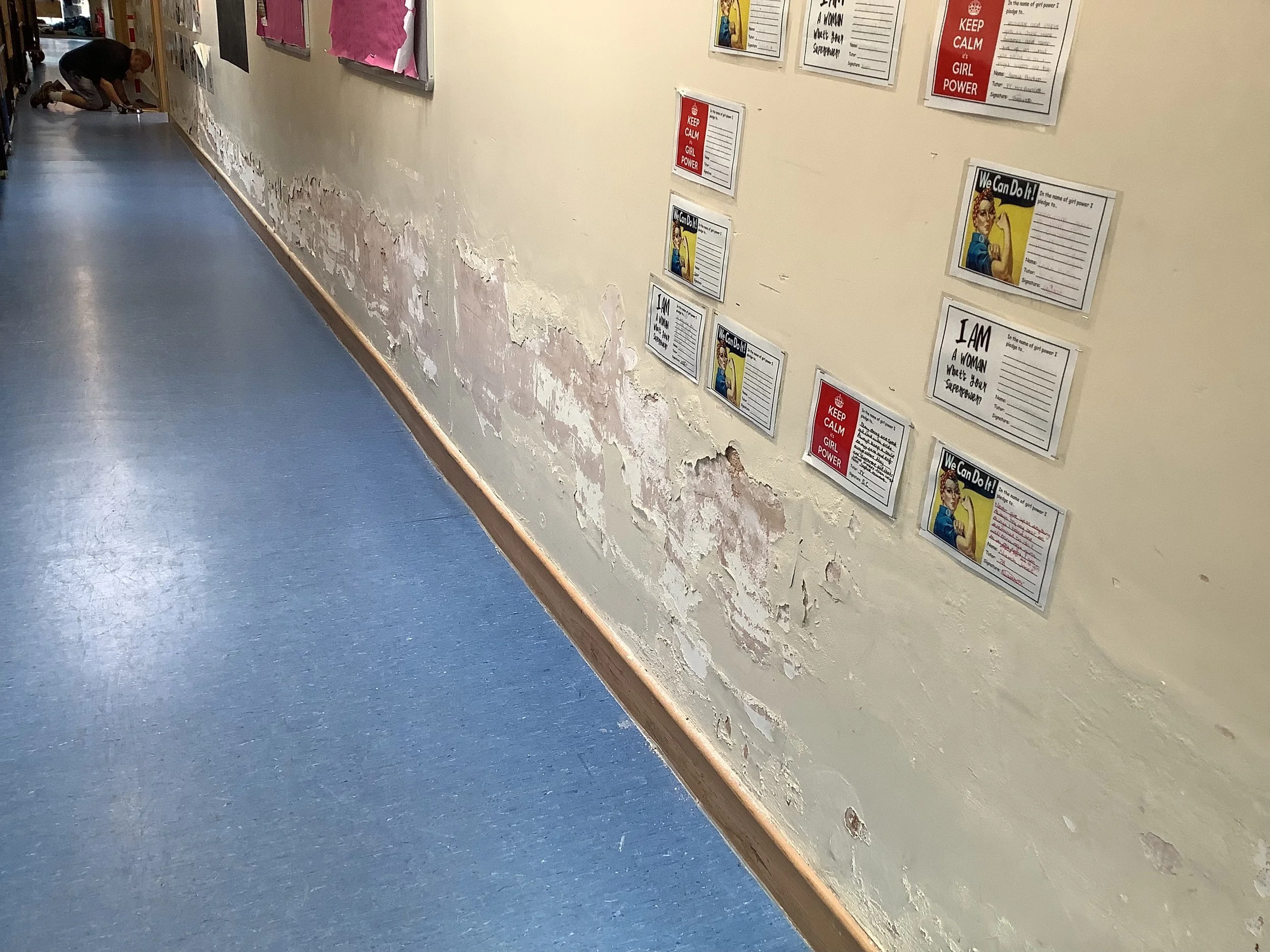
Durndell Building Surveyors were instructed to investigate persistent rising damp within a recently completed school extension in Milton Keynes. Despite initial assurances that the underfloor heating had been pressure-tested and confirmed watertight, visible tide marks and discolouration continued to appear around the base of internal walls.
The school was constructed on marshland with a high water table, and the new extension included a retaining wall along one side. Our role was to determine whether the dampness originated from a plumbing leak, failed damp-proof detailing, or ground moisture tracking through the slab.
Investigation Approach
- Visual Survey: Moisture mapping of affected walls confirmed consistently high readings at low level.
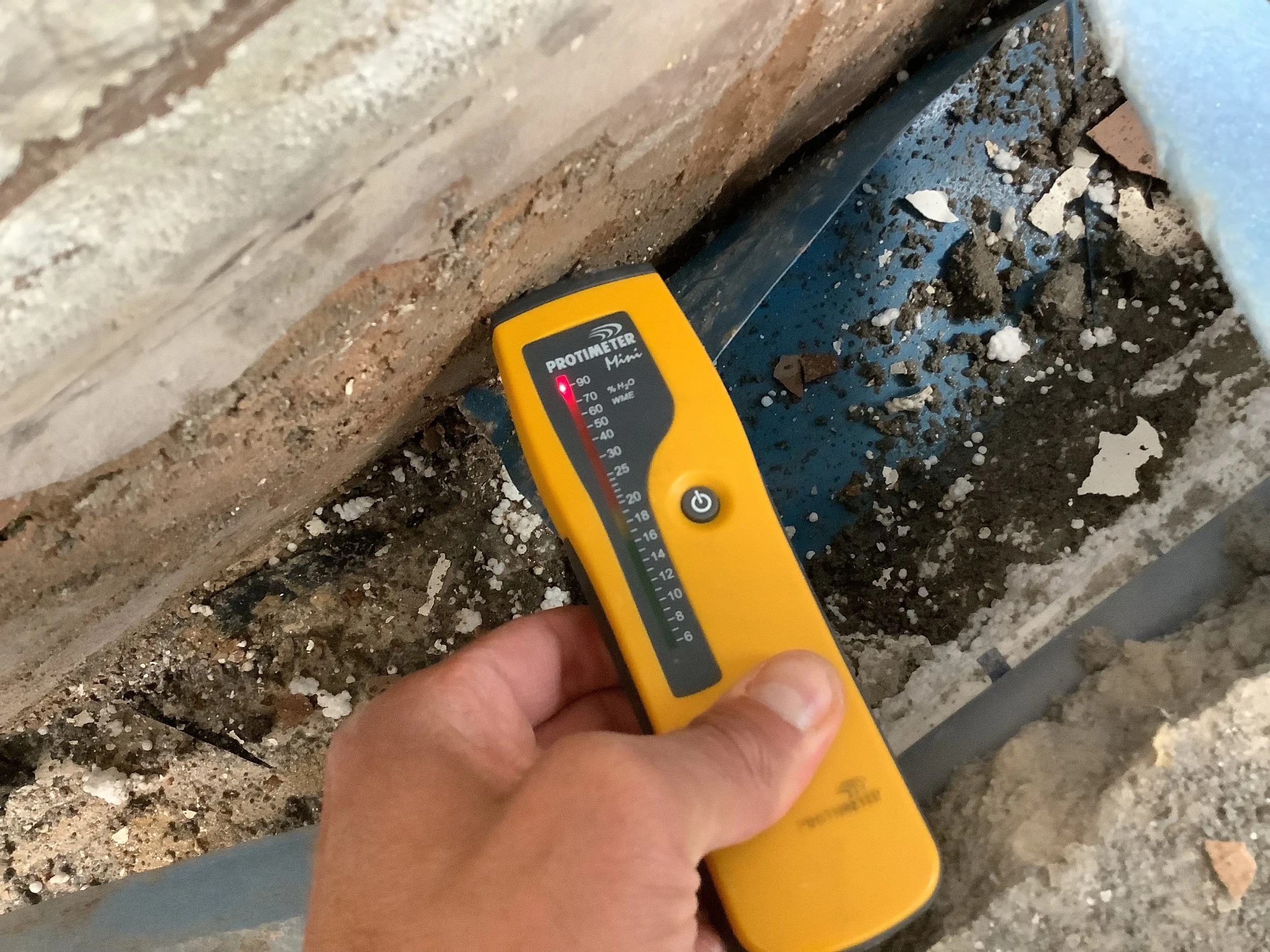
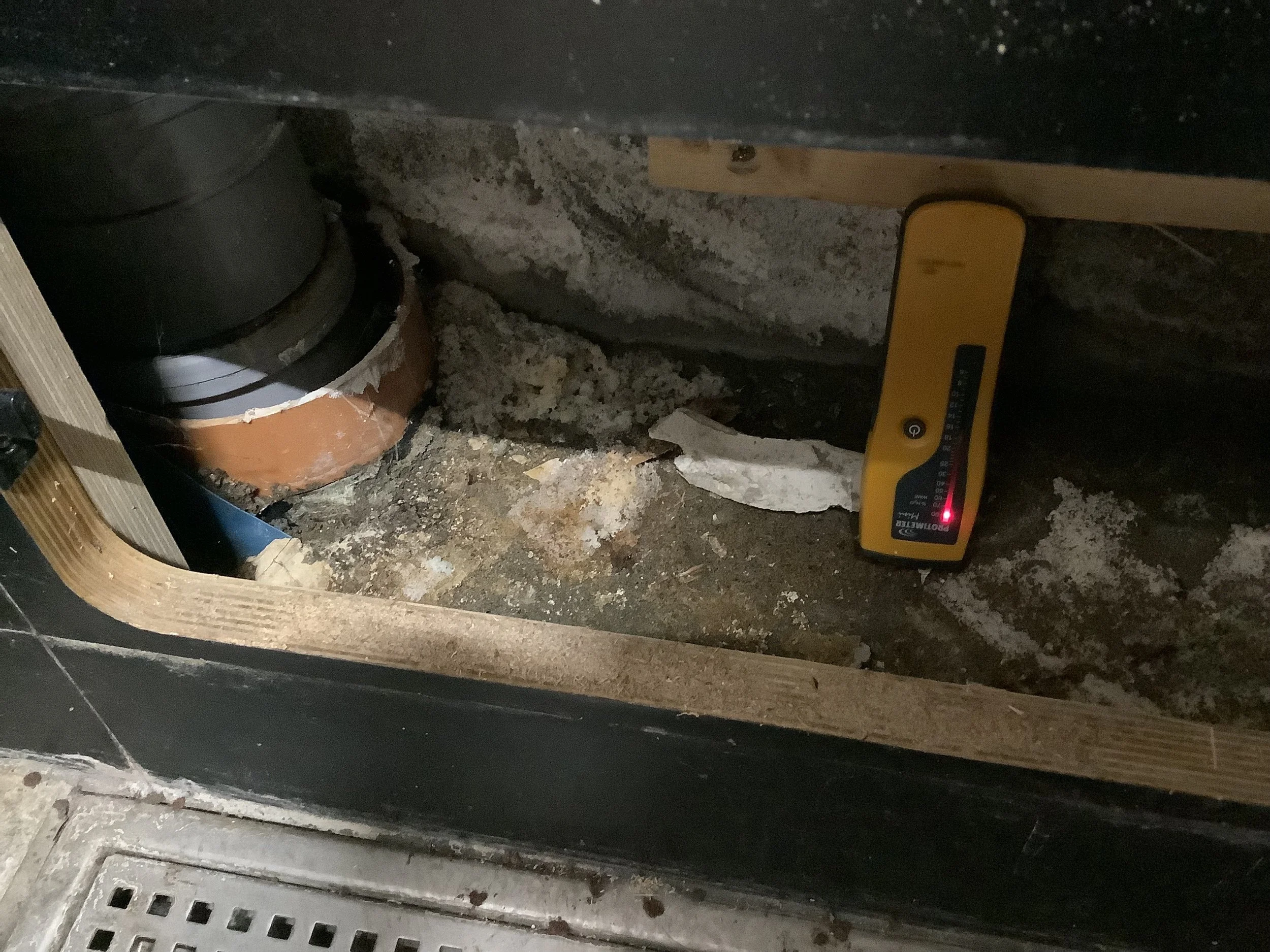
- In-Depth Testing: In-wall readings indicated sustained capillary uptake rather than condensation.
- Thermographic Imaging: Thermal scans identified no anomalies consistent with underfloor pipe leakage.
- Salts Analysis: Samples confirmed chloride and nitrate residues, indicating ground-borne moisture.
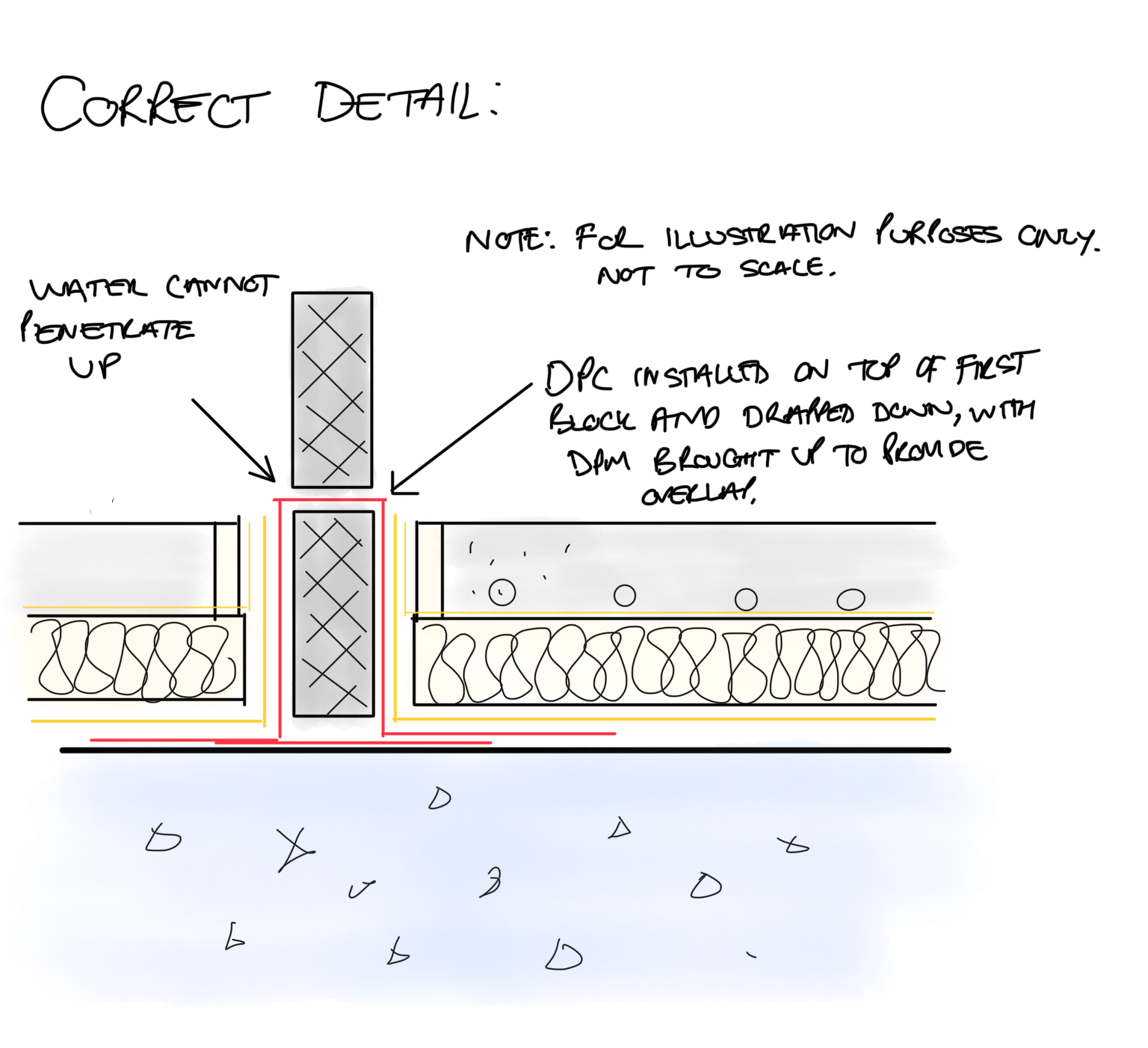
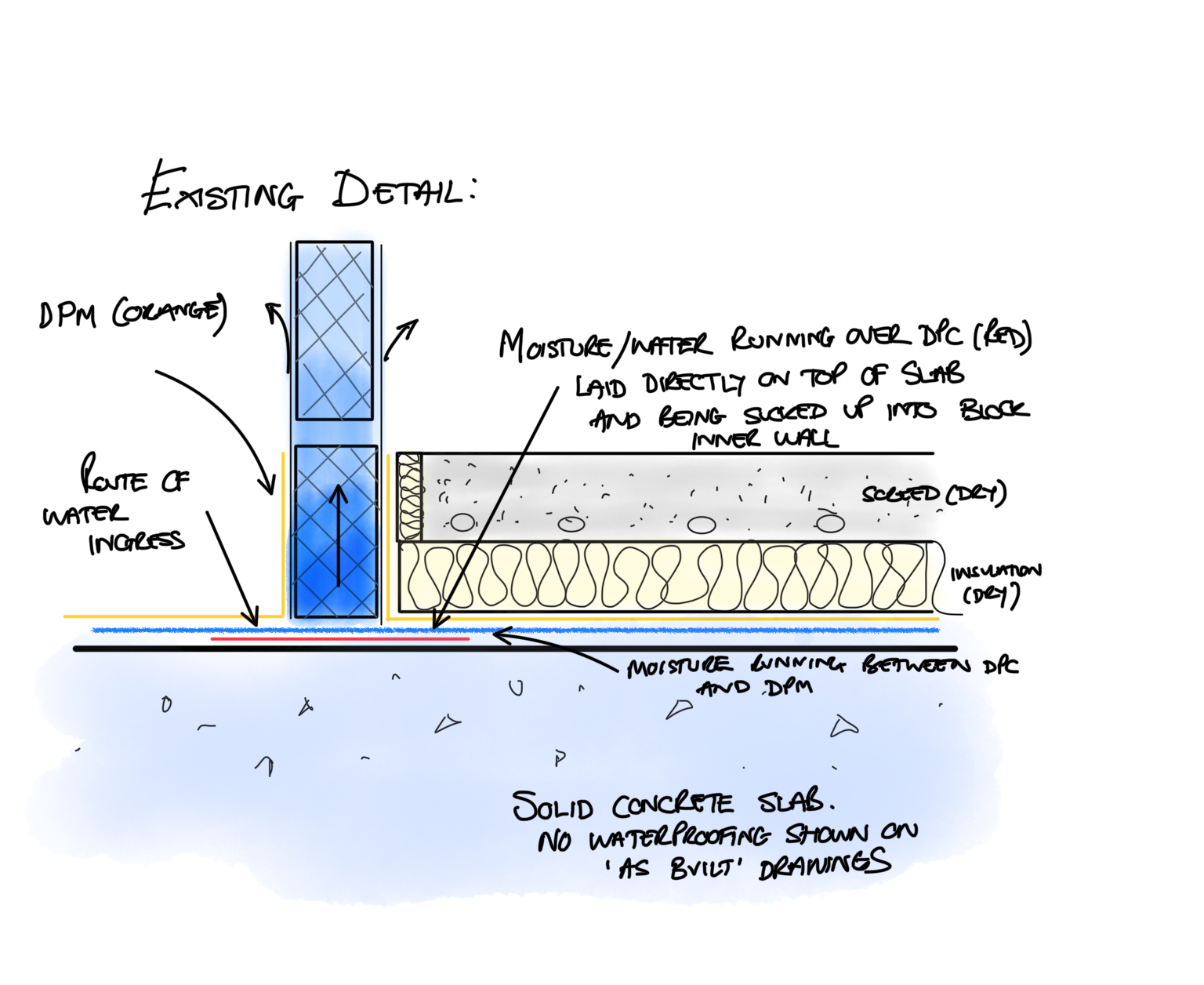
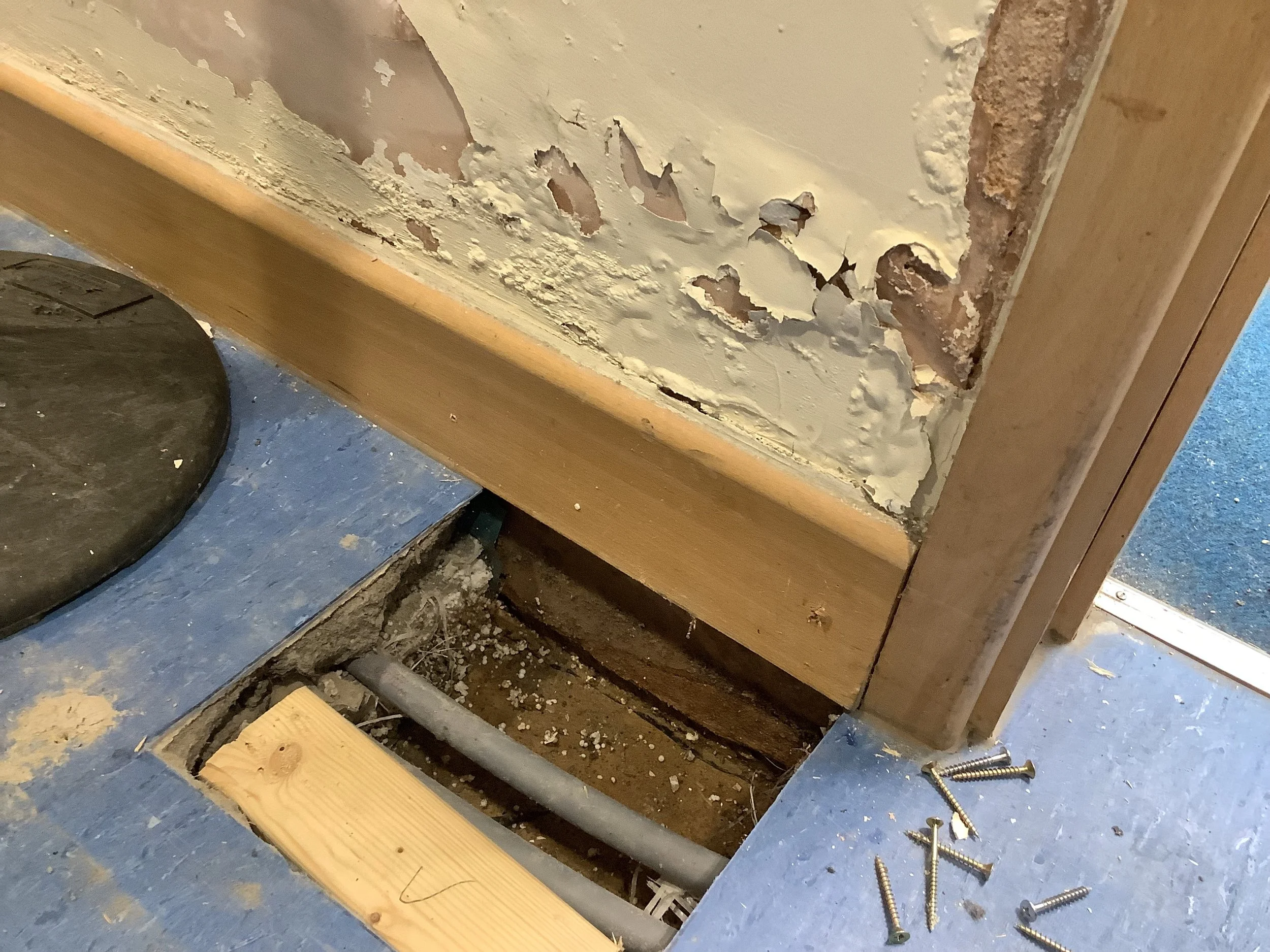
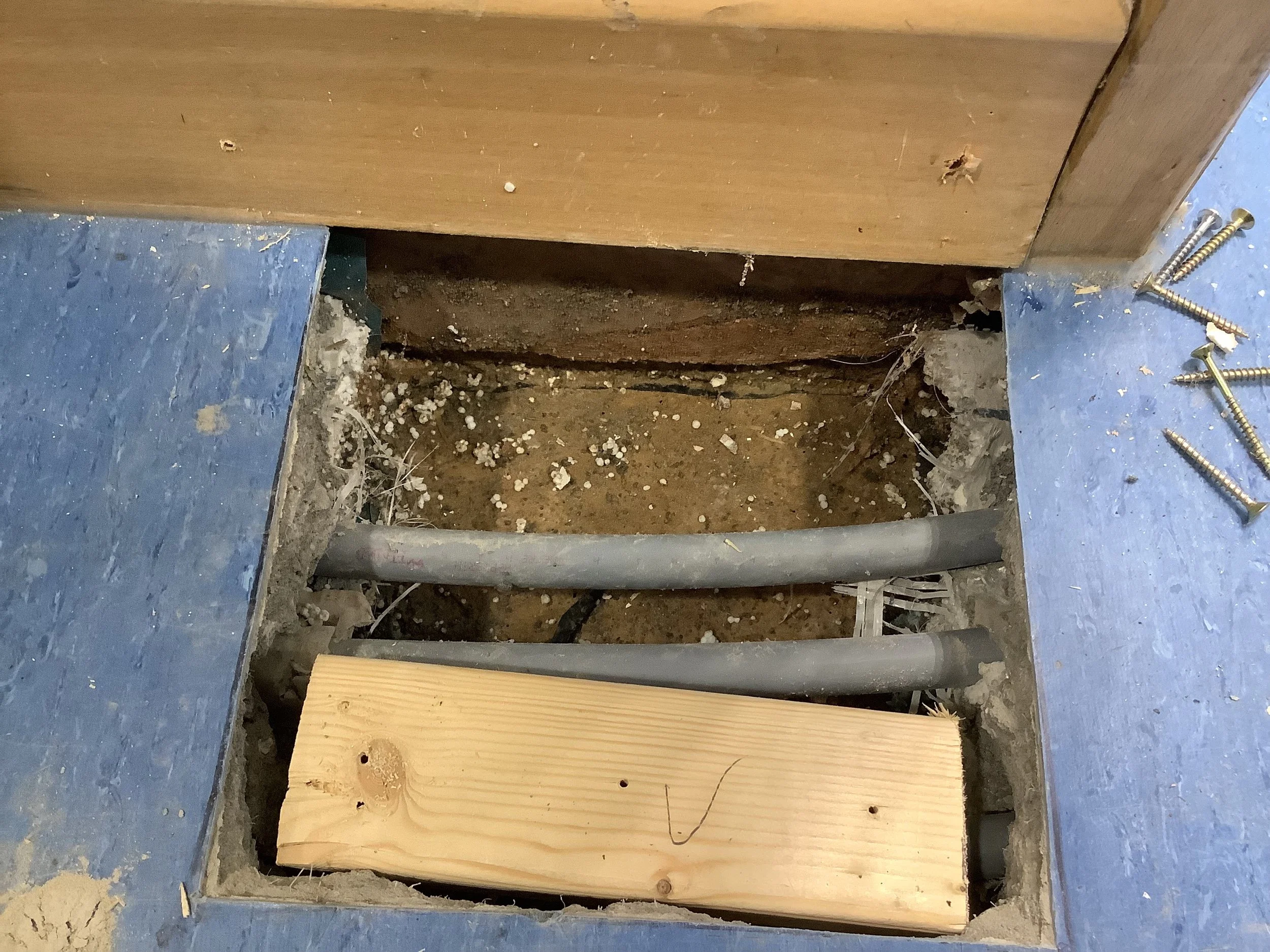
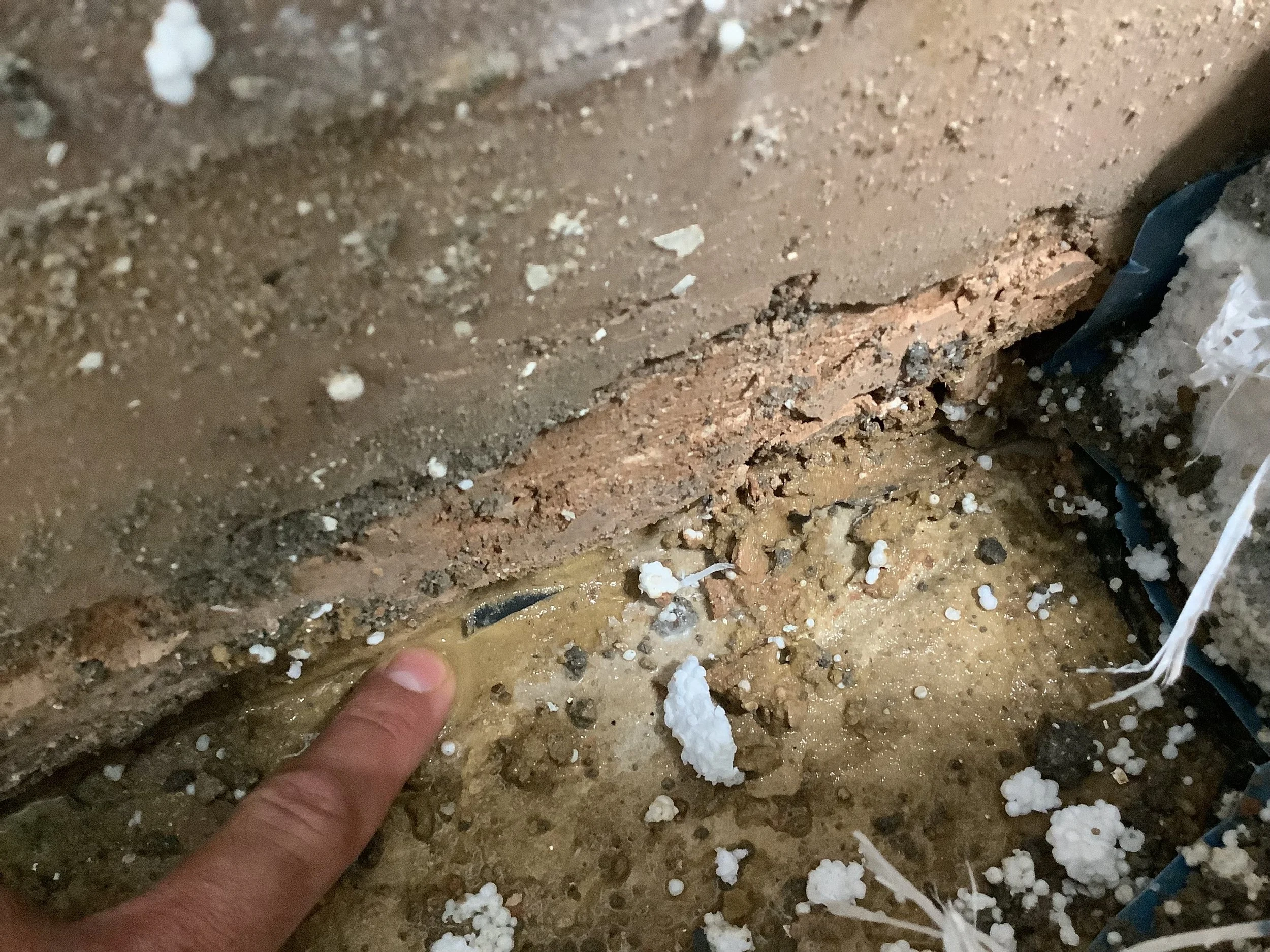
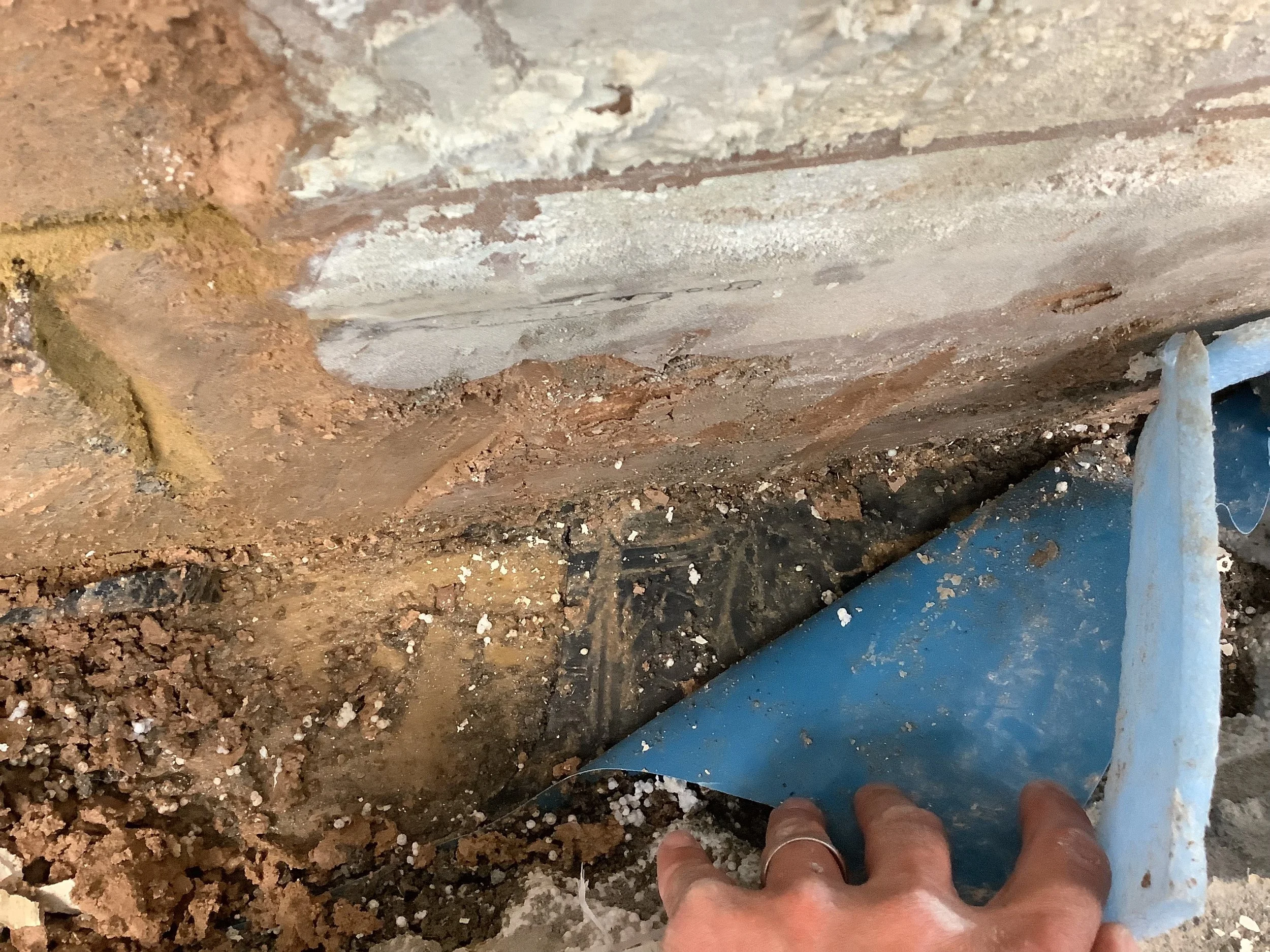
- Trial Openings: Exposed the interface between the damp-proof membrane (DPM) and the damp-proof course (DPC). It was discovered that the DPM and DPC were lapped at the same level rather than the DPC being installed one course above and lapped down to create a watertight junction.
Findings
The defective detailing allowed groundwater to track between the DPM and DPC, bypassing the moisture barrier. Moisture was drawn up the block inner leaf by capillary action, resulting in visible damp lines and surface mould. During investigation, it was also noted that the wall plaster had been carried below the finished screed level, bridging the DPC and providing a secondary capillary path for moisture to rise. This construction oversight significantly exacerbated the dampness and contributed to widespread plaster deterioration.
The accompanying diagrams illustrate the defective ‘Existing Detail’ and the corrected junction showing how the DPC should lap over the DPM to prevent ingress and how the plaster should terminate above screed level to avoid bridging.


Outcome & Recommendations
- Moisture source confirmed as groundwater ingress at the DPM/DPC interface, exacerbated by plaster bridging below screed level.
- Remedial options included external drainage, improved membrane detailing, and breathable internal finishes.
- Investigation provided clear, evidence-based documentation supporting design rectification and warranty discussions.
Technical Note: DPC Remediation Feasibility
Because the walls were already built and plastered, installing a new DPC at the correct level would require sectional removal of masonry along the entire wall base. This is technically feasible but highly disruptive. A hybrid remedial approach was therefore recommended:
- External Land Drain: Installed at or below DPM level to relieve hydrostatic pressure against the slab edge.
- Internal Barrier: Application of a liquid-applied bituminous DPM up the wall base, lapped onto the screed to create a secondary seal.
- Chemical DPC Injection: Supplementary silane/siloxane injection to inhibit further capillary rise.
- Breathable Finishes: Internal re-plastering with lime or renovating plaster to terminate above screed level and permit evaporation.
This approach interrupts moisture pathways without full reconstruction, maintaining structural integrity and minimising disruption to teaching spaces.
Technical Summary
| Moisture Source | Groundwater (high water table) |
| Mechanism | Capillary rise through blockwork via DPM/DPC interface and plaster bridging below screed level |
| Diagnostics Used | Moisture testing, thermography, salts analysis, trial openings |
| Outcome | Design fault – DPC/DPM junction at same level with plaster bridging |
| Remediation | Drainage relief + liquid DPM + breathable finishes terminating above screed |
Durndell Building Surveyors – Forensic Damp Investigations
Independent, evidence-based damp and moisture diagnostics for schools, housing providers, and commercial clients across Milton Keynes and surrounding areas.