Case Study: Compliance Damp & Mould Survey – Bathroom & Bedroom Mould, Milton Keynes
Client: Local authority housing provider – Milton Keynes area
Property Type: Two-bedroom, two-storey mid-terrace house (1960s cavity wall construction, later retrofitted with cavity wall insulation)
Background
Durndell Building Surveyors were instructed to undertake a Compliance Damp & Mould Survey under Awaab’s Law following tenant reports of black mould in the bathroom and bedrooms. The survey was completed within statutory timescales to identify root cause, verify ventilation performance, and set out clear, actionable remedial steps.
Services Provided
1) Compliance Damp & Mould Survey (Awaab’s Law)
- Visual assessment and photographic evidence
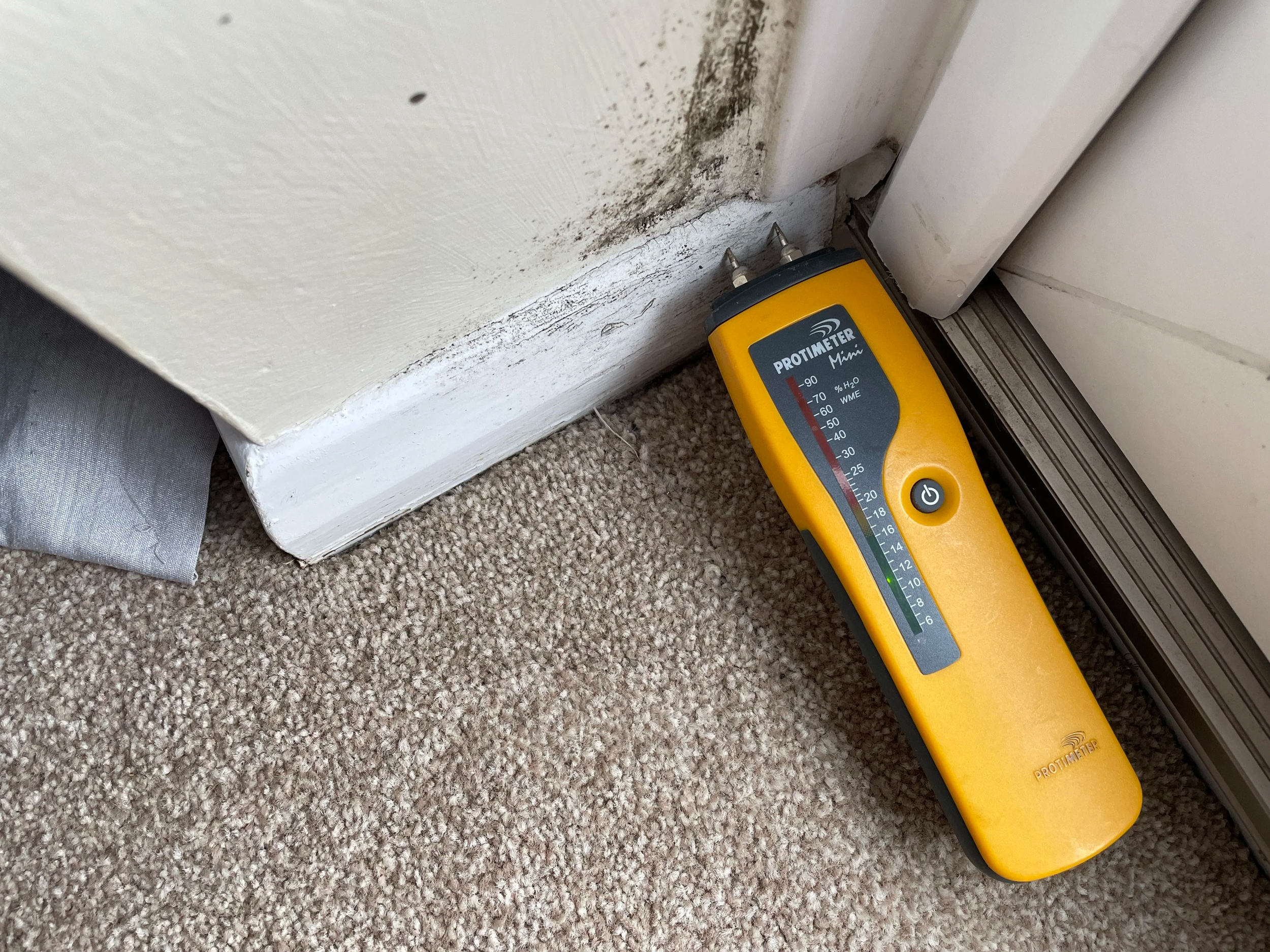
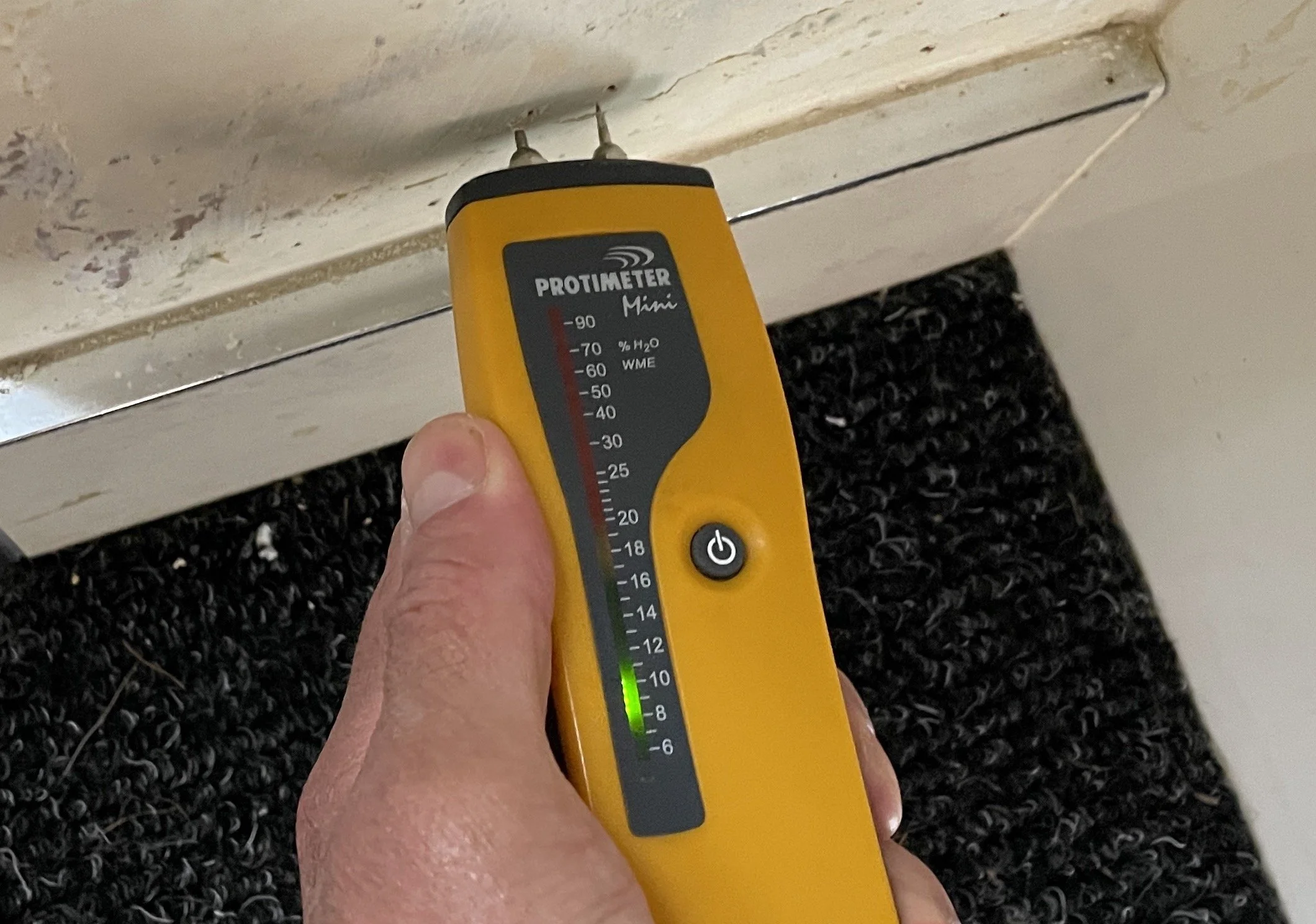
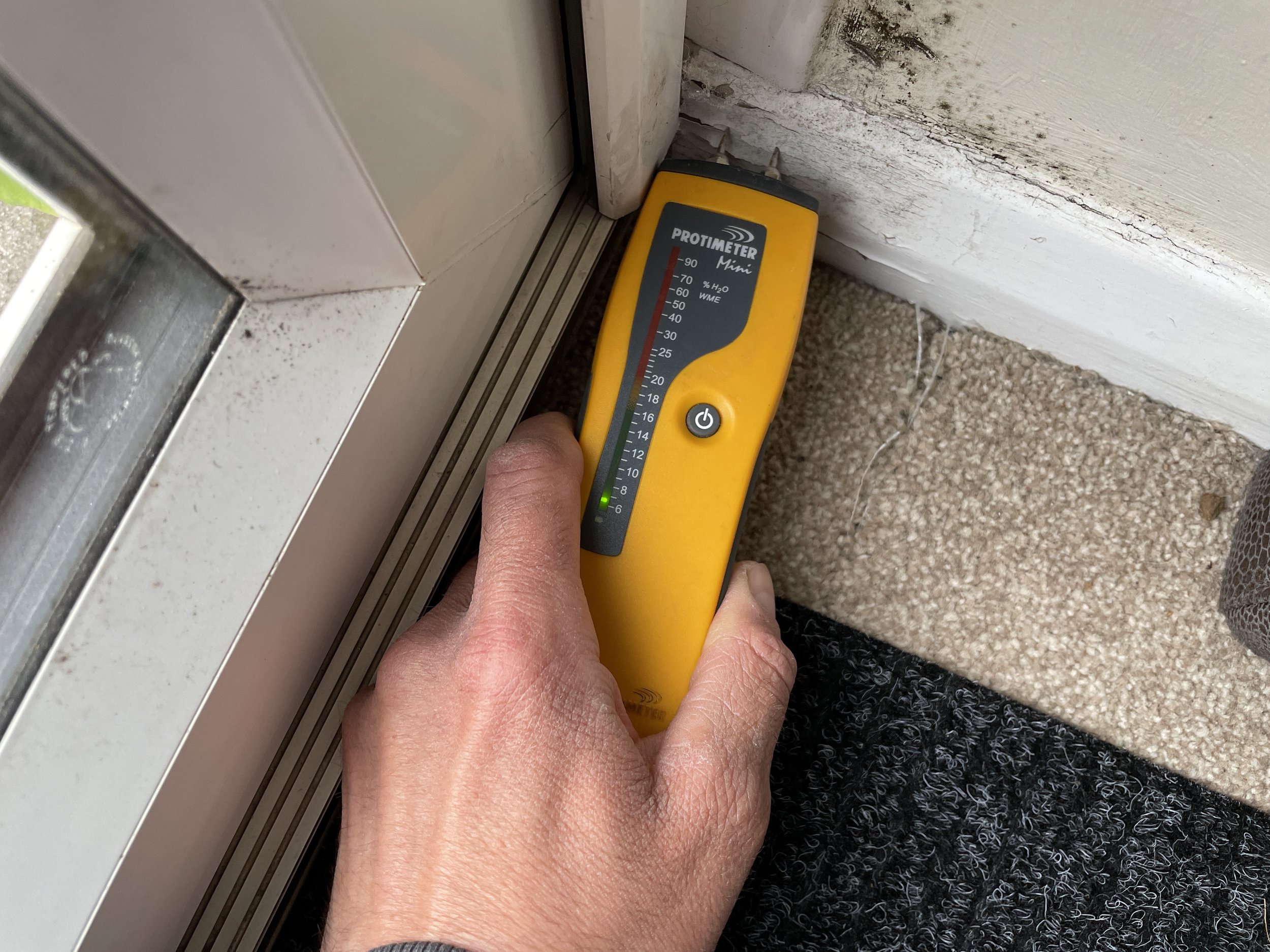
- Moisture mapping & surface temperature readings (Protimeter)
- Thermal imaging to identify cold bridging
- Review of insulation continuity (cavity insulation found sound)
- Assessment of background & mechanical ventilation provision
- Diagnosis aligned to BS 5250:2021 and Approved Document F (2021)
2) Ventilation Performance Testing
Measured bathroom extract using calibrated anemometer/hood to verify performance against Part F minimum rates.
3) Environmental Data Monitoring (Add-On)
Deployed discreet temperature/relative humidity loggers post-remediation for 2–4 weeks to verify stability and confirm success.
4) Reporting & Recommendations
MRICS-led report with evidence pack, compliance grading, prioritised actions, and duty-holder responsibilities under Awaab’s Law.
5) Follow-Up Verification Visit
Re-tested airflow and RH, confirmed drying and absence of mould, and certified compliance.
Findings
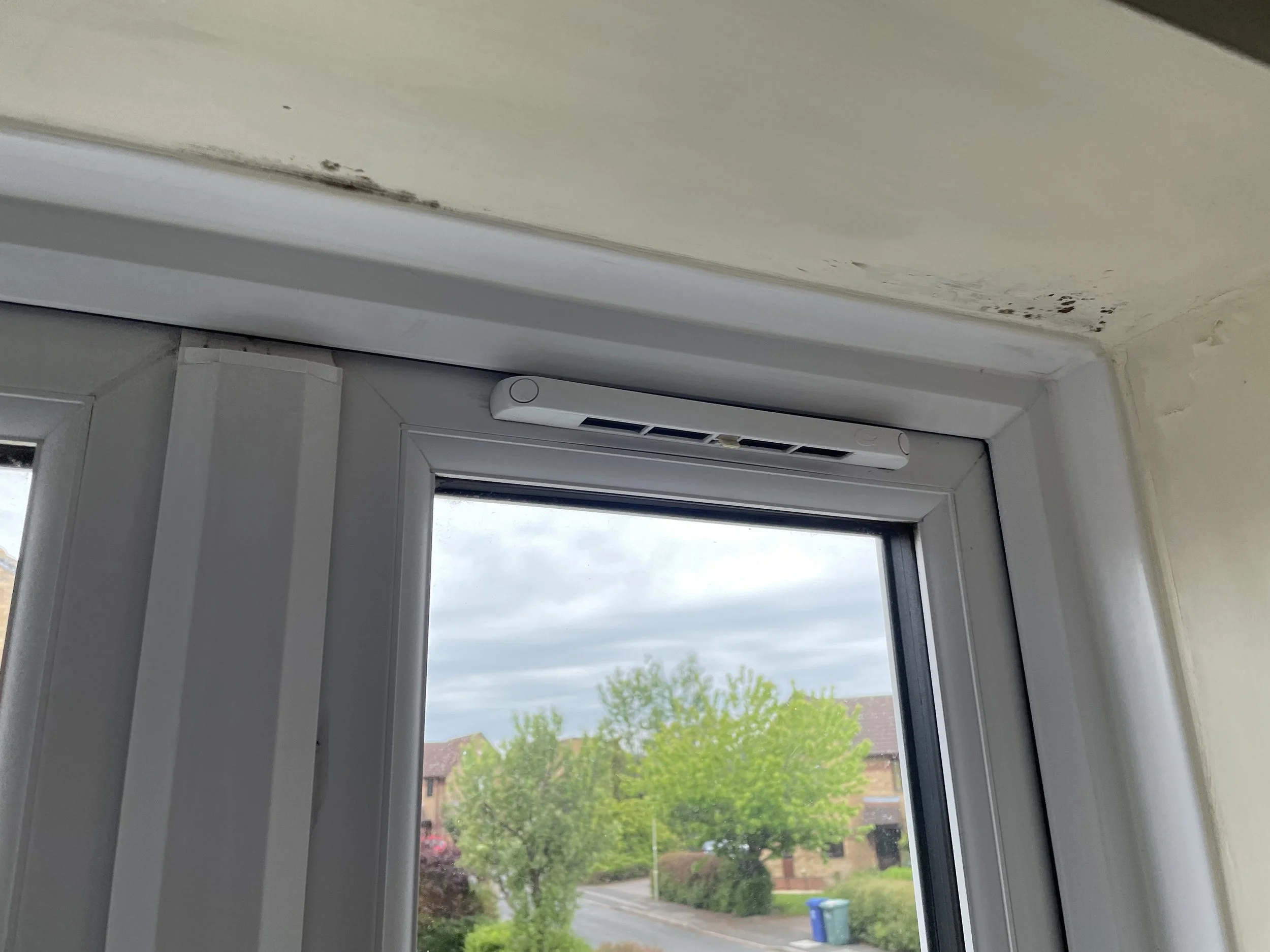
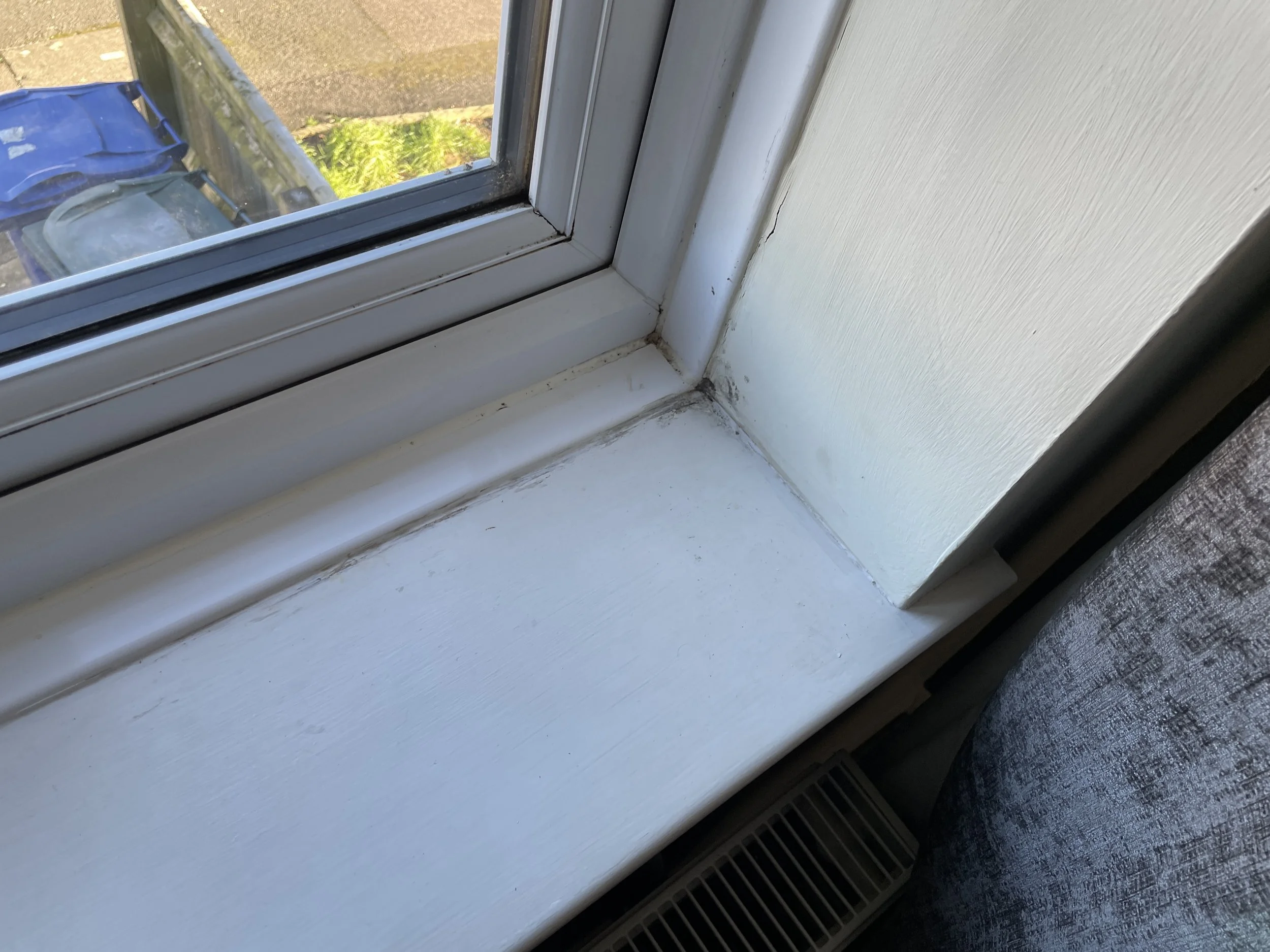
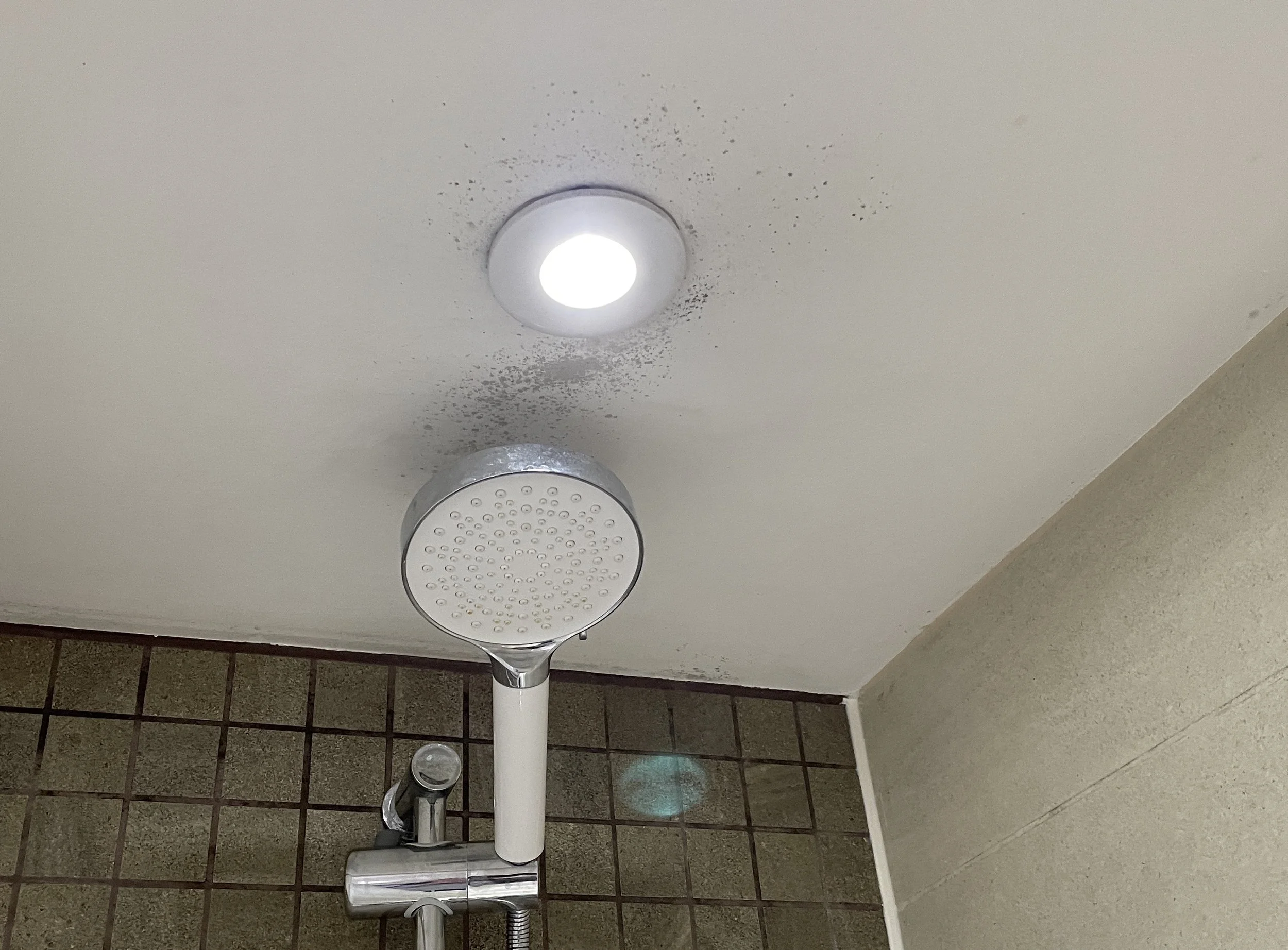
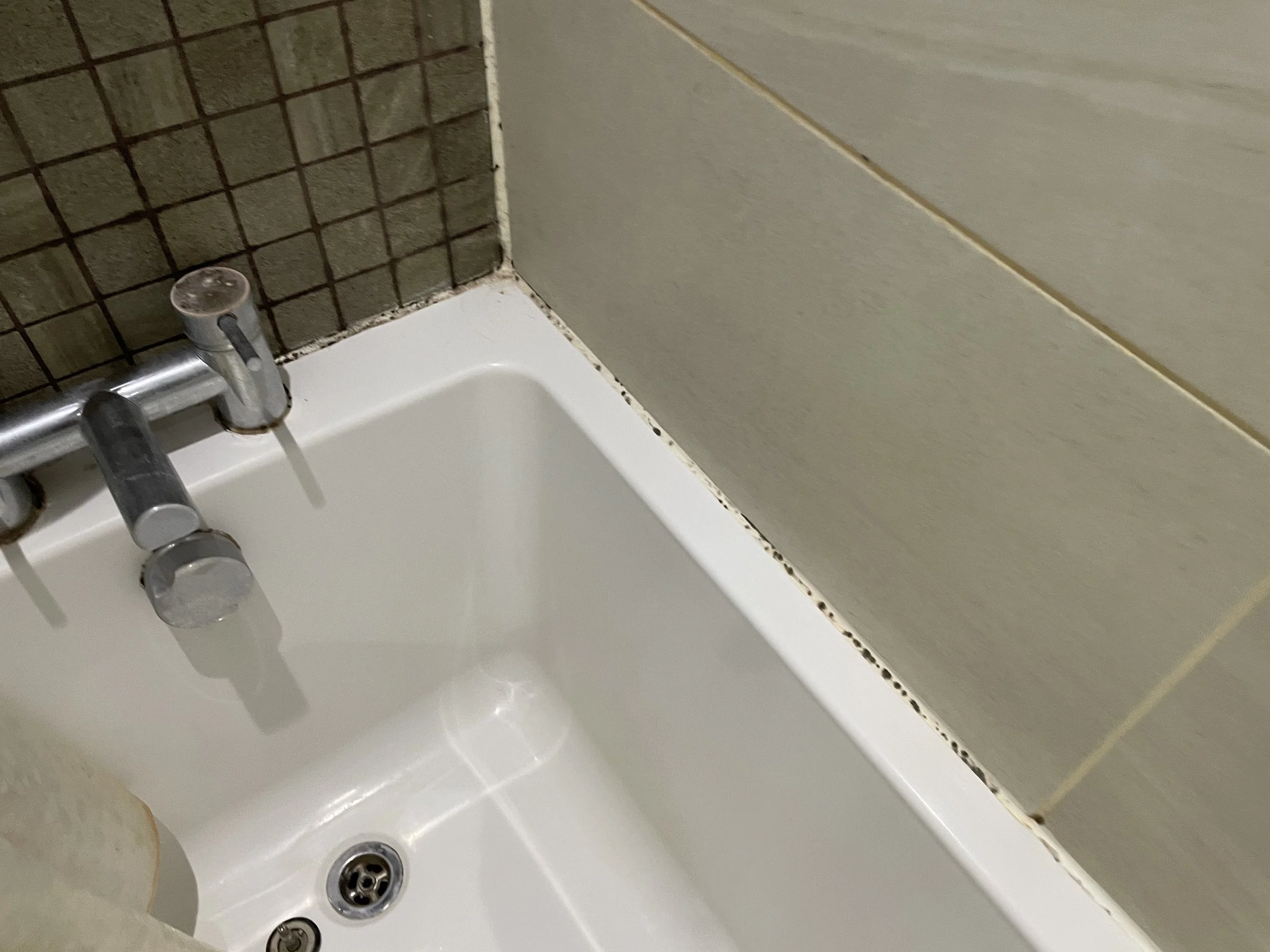
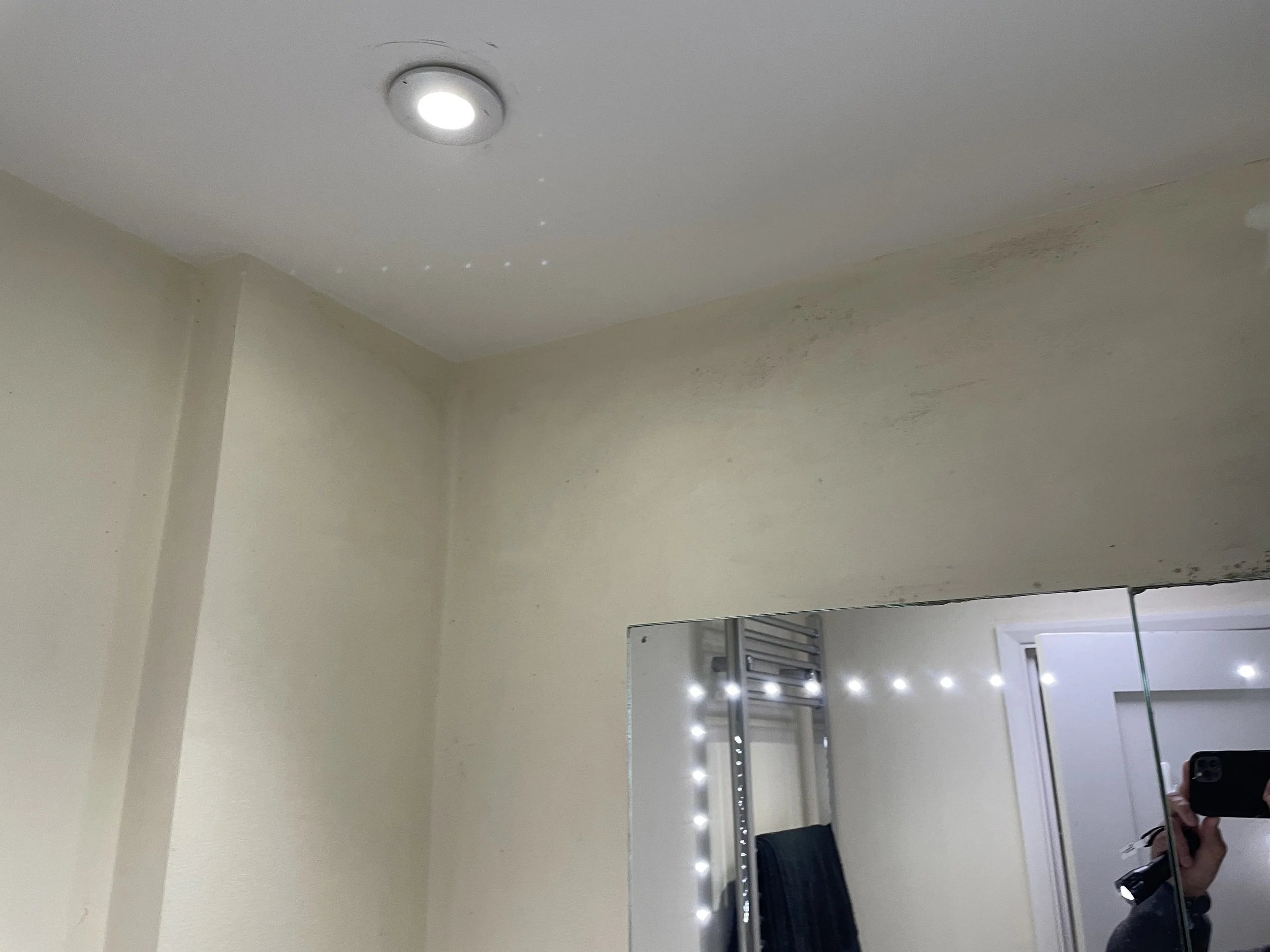
- Mould growth to bathroom ceiling above shower and to window/door reveals in bedrooms.
- Protimeter readings showed substrates dry at depth (no rising/penetrating damp).
- Thermal imaging showed predictable cold bridging at corners/reveals for this construction type.
- Cavity insulation intact and performing correctly.
- Trickle vents open and operational (background ventilation present).
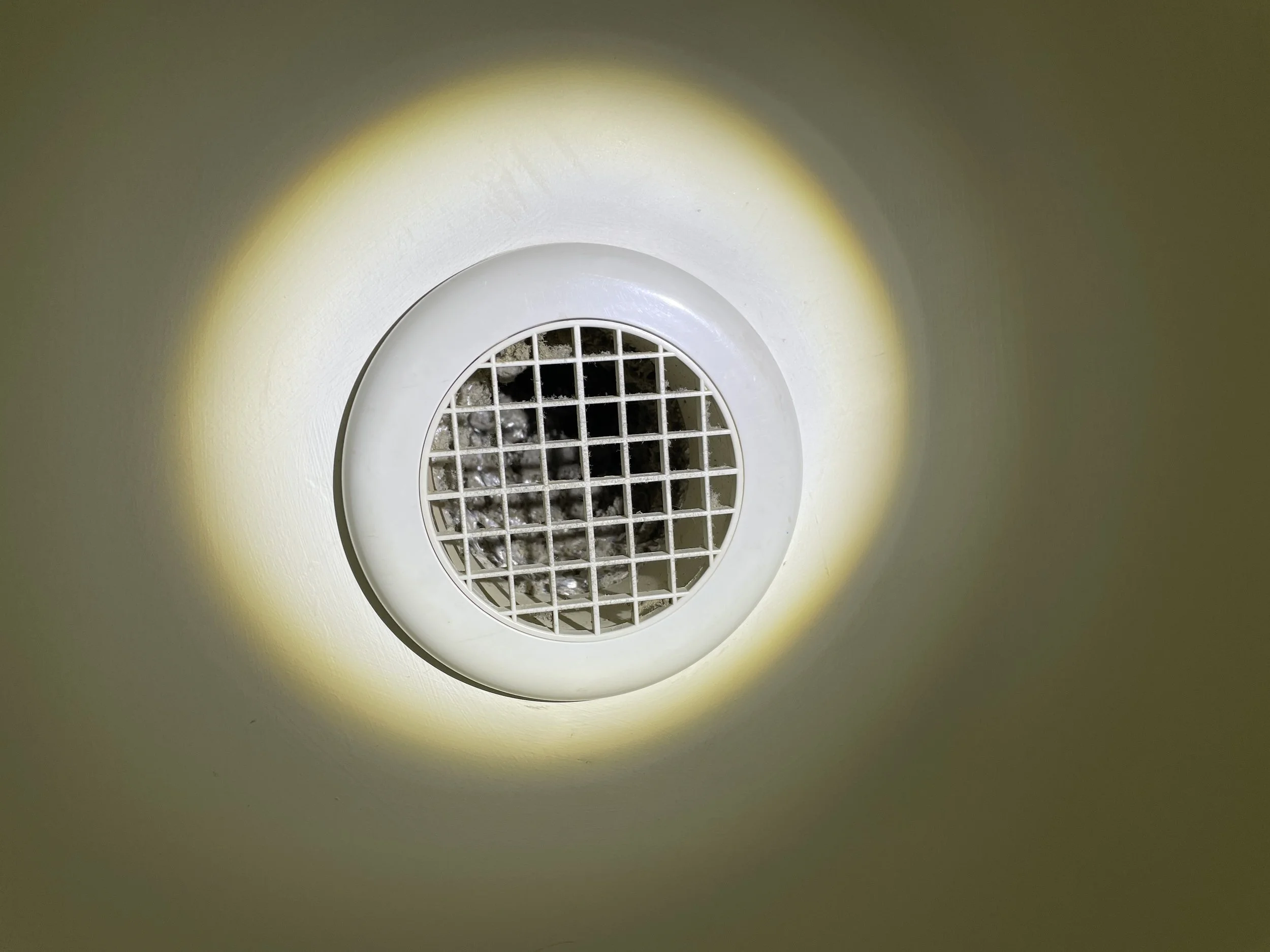
- Bathroom extract fan underperforming with measured airflow below Part F; flexible duct was bent/crushed and dust-laden, restricting flow.
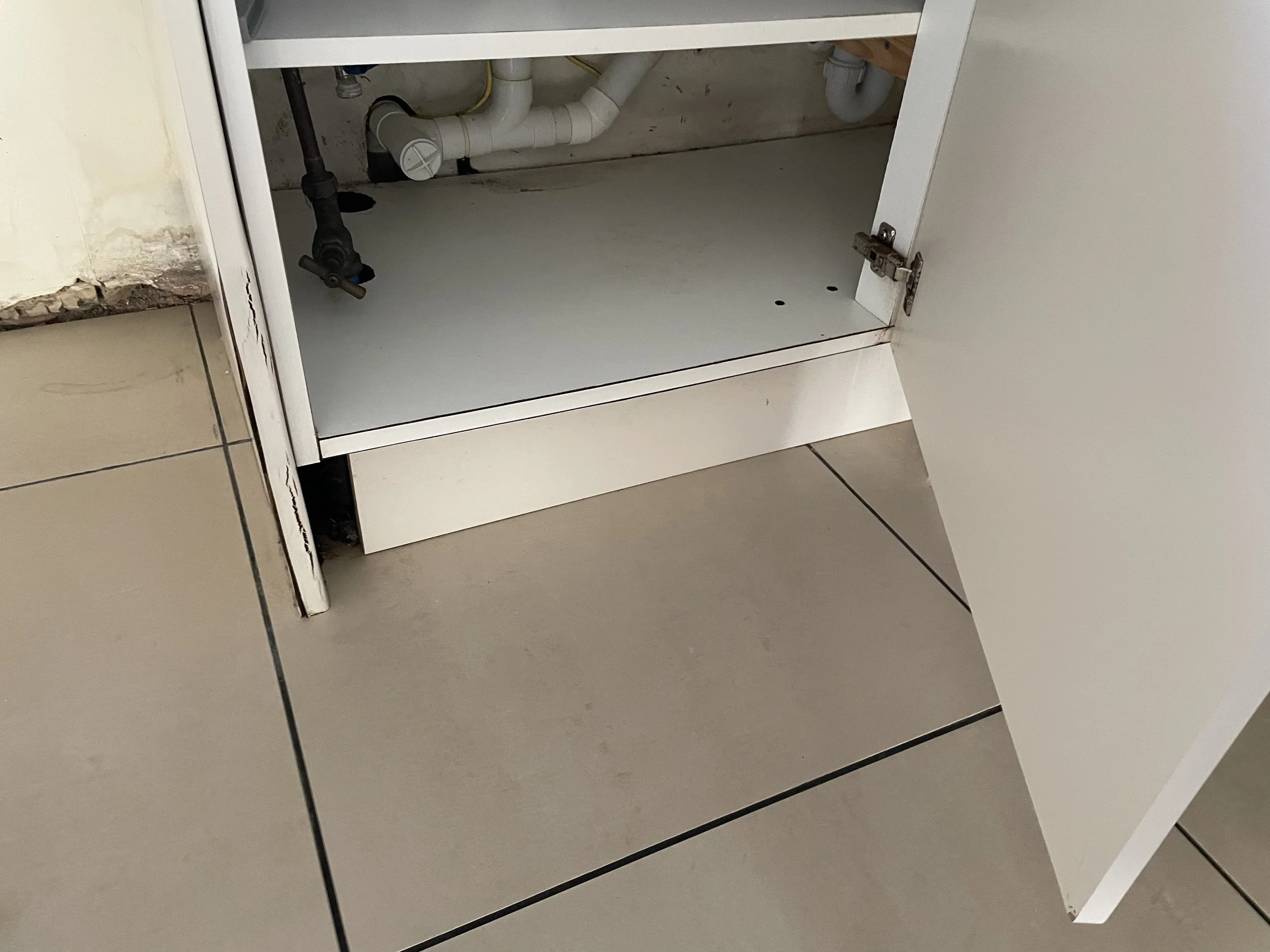
- Under-sink leak identified and contributing to elevated internal humidity.
- Tenant clothes-drying noted but not treated as primary cause under Awaab’s Law.
Diagnosis
Primary: Surface condensation from inadequate mechanical extract ventilation (restricted duct / undersized fan).
Secondary: Local moisture load from minor under-sink plumbing leak raising internal RH.
Excluded: Insulation failure, rising damp, penetrating damp.
Recommendations
- Install a continuous-running, humidity-sensing extract fan achieving ≥ 15 l/s (intermittent) or ≥ 8 l/s (continuous).
- Replace flexible duct with rigid, smooth-bore ductwork, correctly supported and sealed; clean/renew external grille.
- Repair under-sink leak and check adjacent materials for residual damp.
- Clean & redecorate affected areas with breathable anti-fungal paint after verified drying.
- Deploy environmental monitoring post-works to confirm long-term moisture control.
Outcome
- Remedial works completed within three weeks.
- Bathroom extract measured at 16 l/s (Part F compliant).
- Indoor RH stabilised at <60% under normal occupation.
- No recurrence of mould after four weeks of monitoring.
- Dwelling confirmed compliant under Awaab’s Law and Approved Document F (2021).
Key Learning
Ventilation performance—not equipment presence or occupant behaviour—determines compliance. Even in insulated homes, obstructed ducts and minor plumbing leaks can drive condensation and mould. Duty-holders must evidence performance.